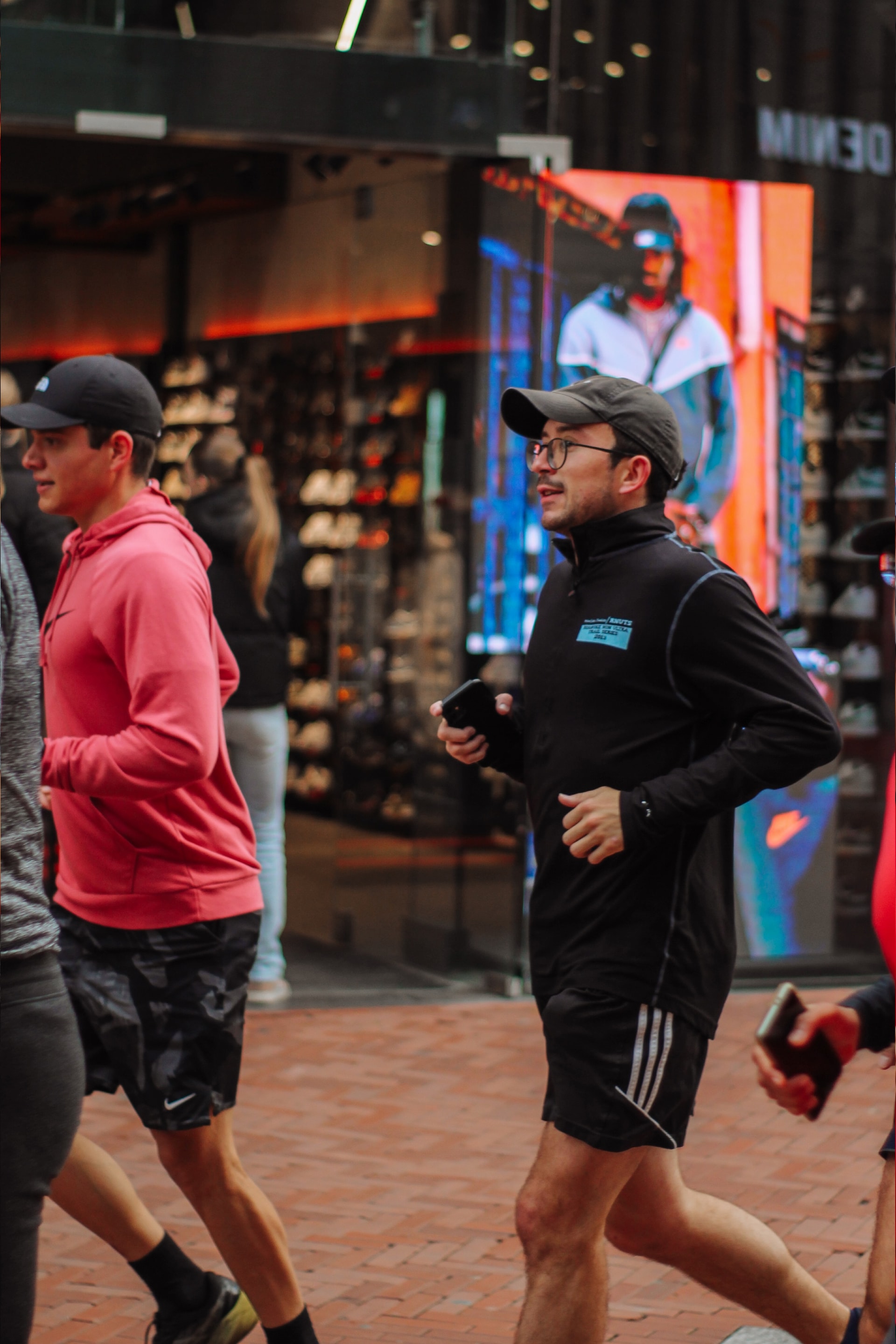
There's no single "perfect" running shoe. Anyone telling you there is… is usually selling something.
The truth is simpler: the best running shoe is the one that feels good on your feet, fits your running style, and doesn't cause problems after a few runs.
Here's how to actually think about it.
Start with comfort, not brands
Don't get distracted by hype or logos.
A good running shoe should feel right immediately:
- You should have a bit of space in the front (your toes shouldn't feel cramped)
- Your heel should feel locked in, not slipping
- Nothing should pinch or press in weird ways
If it feels "kind of okay" in the shop, it won't magically get better on a 10K run.
Think about how you run, not just the shoe
Different shoes serve different purposes:
- Everyday running shoes → your main pair, for most runs
- Faster shoes → for intervals or when you want to push pace
- Long run shoes → more cushioning, easier on your legs
- Trail shoes → if you're running off-road
Trying to make one shoe do everything usually leads to compromise somewhere.
Cushioning: don't fall for extremes
It's easy to assume more cushioning is always better, but that's not true.
- Too soft → can feel unstable and slow
- Too hard → your legs take more impact
The right balance is simple: it should feel smooth and natural, not like you're sinking or pounding the ground.
Heel drop (don't overcomplicate it)
Heel drop is just the height difference between heel and front of the shoe.
- Higher drop → often feels easier for beginners
- Medium drop → works for most people
- Low drop → more natural feel, but your body needs time to adjust
If you switch drastically, your calves will notice first.
Stability vs neutral (keep it simple)
- Neutral shoes → for most runners
- Stability shoes → extra support if your foot rolls inward a lot
But don't assume you need correction unless you actually do. A lot of people don't.
Where you run actually matters
- Roads → normal running shoes
- Treadmill → lighter, flexible shoes
- Trails → grip and protection matter more
- Mixed city runs → durability is key
Your environment shapes the shoe more than you think.
One shoe isn't enough (if you're serious about running)
If you run regularly, rotating shoes helps:
- One daily trainer
- One faster pair
- Optional trail or long-run shoe
It keeps things comfortable and actually makes shoes last longer.
Final thought
The "perfect" running shoe isn't something you find once and stick with forever.
It's the pair that disappears when you run - meaning you stop thinking about them and just run.
If that happens, you got it right.
Still figuring out what works for you?
Join Social Run Club and talk to runners who've tried everything. We meet Saturday mornings at 10:00 AM at Cyklist and Wednesday evenings at 19:30 at De Blob. All paces welcome.
Join the community